Concept: A Smart Kitchen Design That Feels Bigger, Warmer, and More Expensive
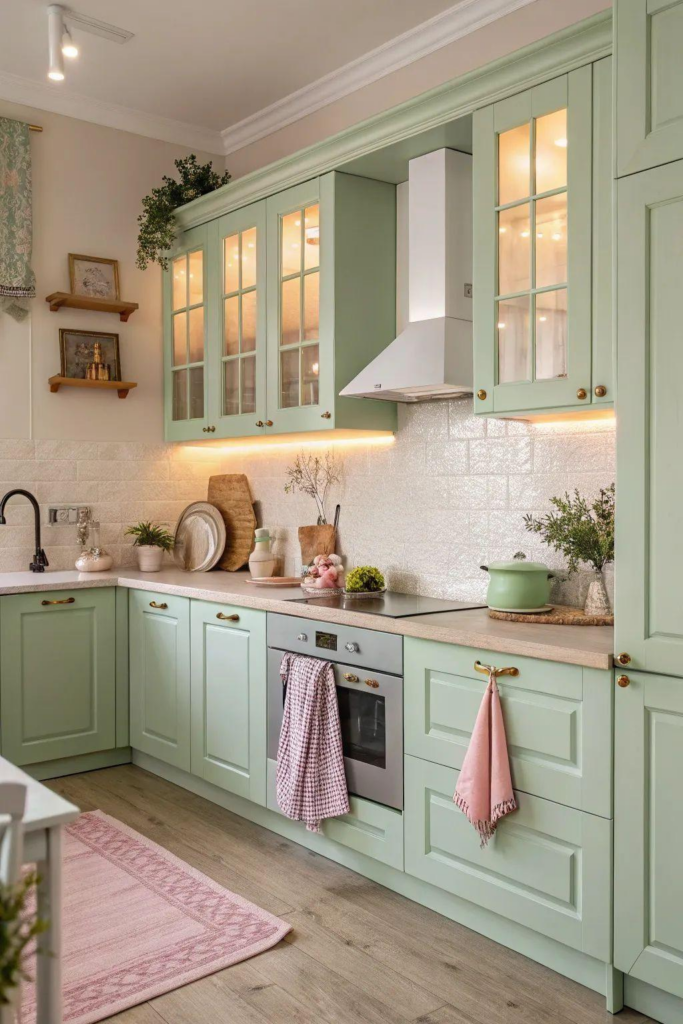
This kitchen is a precise example of how modern kitchen design has shifted in 2026: away from sterile minimalism and toward warm, livable spaces with layered materials. Designers are now prioritizing texture, natural finishes, and visual balance to avoid cold, impersonal interiors .
In real client projects—especially in urban apartments or compact homes—the goal is not just aesthetics. It’s about creating a kitchen that works efficiently while increasing perceived space and long-term value in a home remodel.
Layout Strategy: Why This Kitchen Remodel Works
Single-Wall Kitchen with Vertical Expansion
This is a linear (single-wall) layout, one of the most efficient solutions for small kitchens. In 2026, designers increasingly use this format in compact homes because it simplifies circulation and reduces renovation costs.
What makes this version effective:
- Centralized work zone (sink + prep area)
- Minimal upper cabinetry to avoid visual clutter
- A tall glass cabinet replacing bulky wall units
This aligns with current design thinking: kitchens are moving toward zoned functionality and simplified layouts, especially in small spaces .
Materials and Color: The New Language of Interior Design
1. Sage Green Cabinets (Lower Units)
Muted green cabinetry introduces depth without overwhelming the space. It’s a strategic choice in both kitchen remodel and bathroom remodel projects because it feels timeless and organic.
2. Natural Wood (Upper + Tall Cabinet)
Warm wood tones are dominating 2026 interiors, replacing cold grays. This shift reflects a broader movement toward human-centered interior design .
3. Glass Display Cabinet
This is not just decorative—it’s a spatial tool:
- Reduces visual weight
- Adds depth and layering
- Turns storage into a design feature
Glass-front cabinetry is also recommended by designers to make kitchens feel lighter and more open .
Storage Engineering: Built for Real Life
From a professional standpoint, the storage strategy is what elevates this project:
- Deep drawers → easier access than shelves
- Minimal upper cabinets → less visual pressure
- Tall cabinet → vertical storage optimization
In both kitchen design and bath remodeling, the trend is clear:
👉 maximize usability while minimizing visual noise
Kitchen Renovation Costs: What This Design Actually Implies
Let’s translate this design into real numbers for a U.S. client.
- Basic refresh: $15,000–$30,000
- Mid-range remodel (similar to this): $25,000–$45,000
- High-end version: $60,000+
Typical cost distribution:
- Cabinets: 30–40%
- Labor: 20–35%
- Countertops: 10–15%
👉 This specific kitchen would fall into the mid-range kitchen remodel costs category, assuming semi-custom cabinetry and standard layout (no structural changes).
How This Approach Translates to a Full Home Remodel
This kitchen is not an isolated solution—it’s a blueprint for a cohesive home remodel.
The same principles apply to:
- Bathroom remodel / renovating bathrooms → use warm materials + clean geometry
- Living spaces → reduce clutter, add texture
- Storage systems → prioritize function over volume
In modern projects, clients increasingly request visual continuity across kitchen and bath remodeling, using the same palette and materials.
Common Mistakes to Avoid
From real client projects, these are the most frequent errors:
- Overloading upper cabinets → kills space perception
- Using cheap wood textures → breaks the premium look
- Ignoring lighting → flattens the entire design
- Choosing trendy but aggressive colors → short lifespan
Also, overly cluttered or outdated elements can quickly make a kitchen feel cheap or dated .
How to Upgrade This Design (Mid → Premium Level)
If a client wants to elevate this kitchen within a kitchen remodel, I typically recommend:
- Integrated cabinet lighting (especially in glass units)
- Thin quartz or stone backsplash
- Concealed appliances
- Upgraded hardware (brushed brass or bronze)
These upgrades increase both usability and perceived value—key metrics in any interior design project.
Final Takeaway: The Formula Behind This Kitchen
This kitchen works because it follows a clear, professional formula:
👉 Color (soft green) + Natural wood + Glass + Minimalism
It’s a design that:
- maximizes small space
- controls budget
- feels premium without excess
For clients planning a kitchen remodel, bathroom remodel, or full home remodel, this is exactly the level of balance you want:
functional, timeless, and scalable across the entire home.
Leave a Reply
You must be logged in to post a comment.